Russian
Assessing refractory brick quality requires a systematic approach integrating visual inspection and intrinsic property testing. Below are professional methodologies, critical indicators, and practical techniques for evaluation:
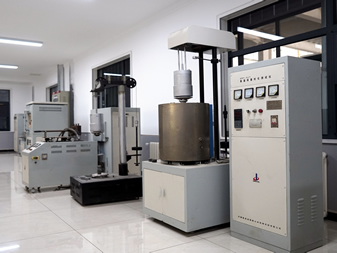
Ⅰ. Visual Quality Inspection (On-Site Rapid Assessment)
The most direct and efficient preliminary evaluation method.
1. Dimensional Tolerance
Method: Measure brick dimensions (length, width, thickness) using calipers or steel rulers.
Standard: Dimensions must comply with national standards (eg, GB/T 10325-2023) or contractual specifications.Excessive deviations (>±1 mm for standard bricks) create oversized masonry gaps, compromising furnace structural integrity, sealing performance, and service life.
2. Surface Defects
Chipped Edges/Corners: Assess damage severity. Minor chips may not affect usability, but severe defects reduce brick strength and suitability for critical zones.
Cracks: Surface Crazing: Shallow, fine network cracks confined to the surface typically have minimal impact on overall performance.
Cross-Edge/Through Cracks: Cracks spanning one or more edges or penetrating the entire brick are critical flaws. They significantly degrade mechanical strength and erosion resistance—reject such bricks.
Melt Holes/Scars: Surface pits or scars caused by high-temperature melting impair aesthetics and erosion resistance.
Warping/Twisting: For large or flat bricks, place them on a level surface to check stability. Warping affects masonry flatness and structural stability.
3. Cross-Section Structure
Method: Break a brick (or inspect sample cross-sections).
Uniformity: The cross-section should exhibit homogeneous structure without visible stratification, density variations, or large inclusions.
Density: Particle-matrix bonding should be tight; excessively porous bricks (high apparent porosity) indicate poor performance.
Color Consistency: Uniform color aligns with typical brick characteristics for its category.
Ⅱ. Physicochemical Performance Indicators (Laboratory Testing, Core Basis)
This is the ultimate basis for judging the internal quality of refractory bricks. Usually, it is necessary to entrust a professional testing institution to conduct the tests. When purchasing, you should ask for the factory inspection report or the third-party testing report.
1. Refractoriness
Definition: Refractoriness refers to the property of a material to resist high temperatures without melting.
Importance: It is the basic requirement for refractory bricks. The refractoriness must be higher than the working temperature of the application environment.
2. Cold Crushing Strength
Definition: Cold crushing strength is the maximum pressure that a unit area of the brick can withstand at room temperature.
Importance: It represents the brick's ability to withstand transportation, masonry, and mechanical loads. Bricks with high strength are more wear-resistant, shock-resistant, and have a longer service life.
3. Apparent Porosity
Definition: Apparent porosity is the percentage of the volume of open pores (pores connected to the outside) in the brick body.
Importance: This is a very crucial indicator. A low apparent porosity is usually a sign of high-quality bricks.
Key Characteristics of Low Apparent Porosity in Refractory Bricks: Stronger resistance to slag and chemical erosion; Higher bulk density and denser structure; Better thermal conductivity (for some bricks)
4. Bulk Density
Definition: Bulk density is the mass of the brick per unit volume (including pores).
Importance: For the same material, a higher bulk density usually means a denser structure, higher strength, and stronger erosion resistance.
5. Load Softening Temperature
Definition: The load softening temperature is the temperature at which a material undergoes a certain amount of deformation under a constant pressure.
Importance: It indicates the temperature at which the brick begins to soften under the combined action of high temperature and load. This temperature is usually much lower than its refractoriness and is a more important reference index than refractoriness when designing a kiln.
6. Thermal Shock Resistance
Definition: Thermal shock resistance is the ability of a material to resist cracking and spalling when subjected to rapid temperature changes.
Importance: It is crucial for kilns with frequent temperature fluctuations, such as steel - rolling heating furnaces and intermittent kilns. Bricks with poor thermal shock resistance are prone to cracking and spalling.
7. Reheating Linear Change
Definition: Reheating linear change refers to the irreversible expansion or contraction of the brick's dimensions after long - term heating at high temperatures.
Importance: The smaller the change rate, the better. Excessive expansion or contraction can cause the kiln body to crack or the brick joints to widen, affecting the structural stability.
III. Performance Evaluation for Application (Final Assessment)
Chemical Resistance: Select bricks of corresponding materials based on the operating environment (acidic, alkaline, oxidizing, or reducing). For example, magnesia bricks should be chosen for alkaline environments, while silica bricks are suitable for acidic environments.
Abrasion Resistance: For areas subject to severe erosion from gas flow or materials (such as the kiln mouth of cement rotary kilns and circulating fluidized bed boilers), abrasion resistance is the primary indicator.
Judgment Techniques for Refractory Bricks
Inspection Method | Key Points | Simplified Conclusion |
Weighing | For bricks of the same material and size, a heavier feel indicates: | Higher bulk density and denser structure. |
Sound Test | Gently tap with a metal object; a clear, resonant sound suggests: | Uniform internal structure, well-sintered, high strength. A dull sound may indicate internal cracks or poor sintering. |
Fracture Examination | After breaking, observe the cross-section for uniform particle distribution and dense structure: | Indicates good production process control and stable quality. |
Report Verification | Request and verify test reports, focusing on compressive strength, apparent porosity, and refractoriness under load (RUL): | The most reliable basis for assessing intrinsic quality. |
Summary
When evaluating refractory brick quality, follow the principle of "preliminary visual screening → performance-based assessment → application-specific selection." Avoid relying solely on a single indicator; instead, conduct a comprehensive evaluation. For critical applications, prioritize laboratory test data and select reputable manufacturers.